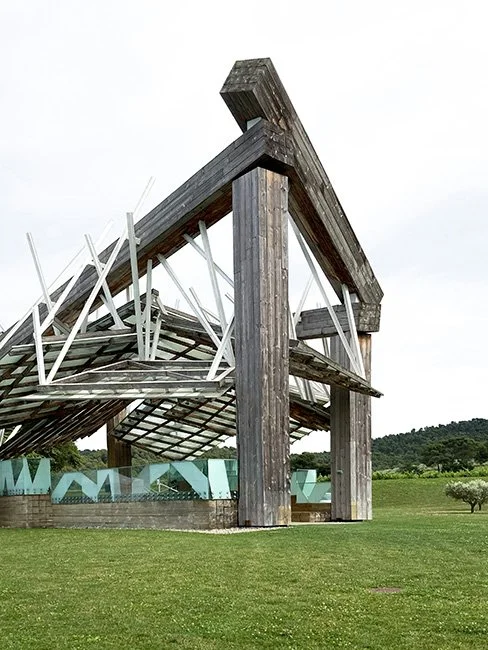
FRANK GEHRY
Frank Gehry is a Canadian-American architect celebrated for reshaping the boundaries of modern architecture through his sculptural, often deconstructivist designs. Known for his unconventional use of materials like titanium, stainless steel, and glass, Gehry's buildings seem to defy structural norms, embracing asymmetry, fragmentation, and fluid forms. His work resists predictability, often blurring the line between architecture and art. Projects such as the Guggenheim Museum in Bilbao and the Walt Disney Concert Hall in Los Angeles showcase his signature style—bold, expressive, and deeply experiential. Gehry’s architecture emphasizes movement and emotion over rigid function, inviting viewers to engage with structures as dynamic, living forms. Despite his radical aesthetic, he consistently considers human interaction and urban context, making his work both provocative and grounded. Throughout his career, Gehry has remained a transformative figure, challenging architectural conventions while influencing generations of designers.
ABOUT THE ARCHITECT
PROJECTS:
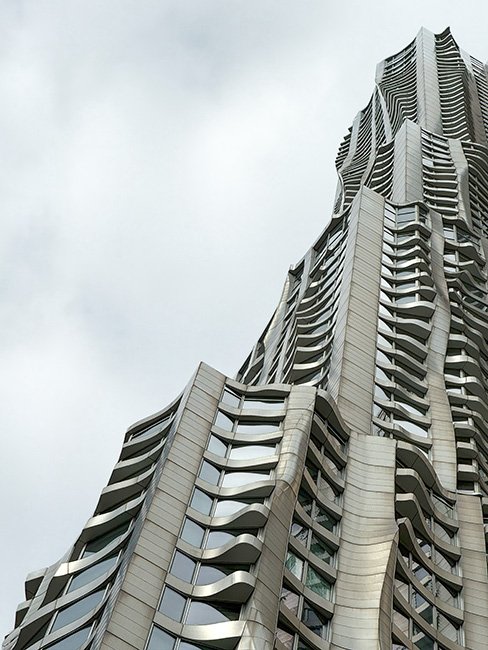
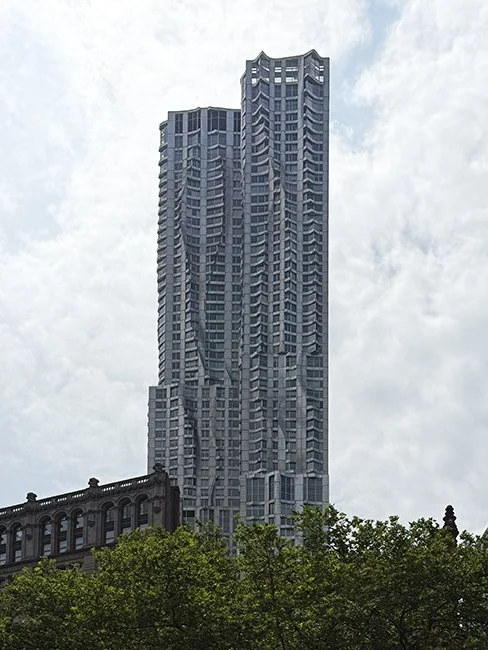
NEW YORK BY GEHRY
New York City, NY - United States
ADDRESS:
8 Spruce St, New York, NY 10038
ACCESS:
Restricted: This is a private residence, access to the public is not permitted.
DISCRIPTION:
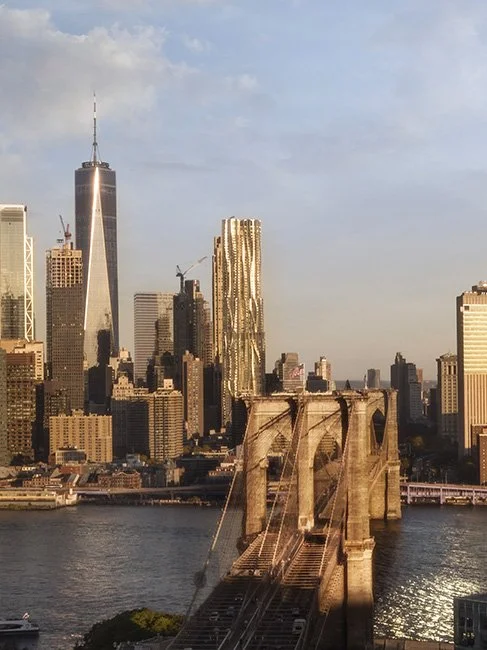
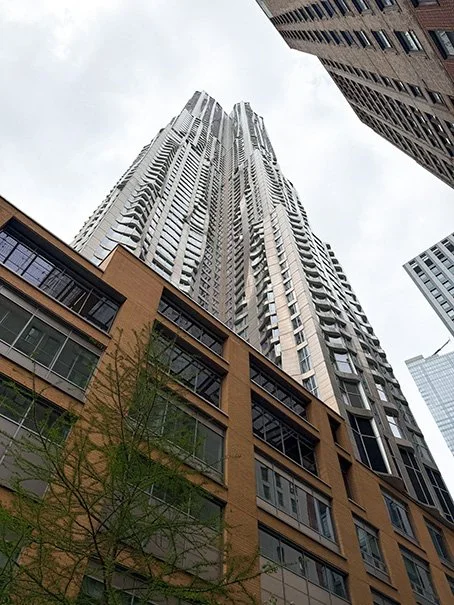
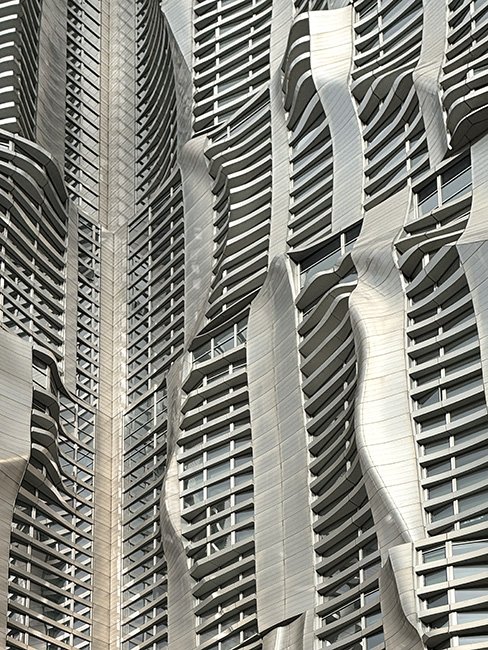
8 Spruce Street, also known as New York by Gehry, is a striking example of contemporary high-rise architecture by Frank Gehry. Towering over Lower Manhattan at 870 feet, the building’s defining feature is its rippling stainless steel façade, which creates an illusion of fluid motion and reflects shifting light throughout the day. Gehry’s design challenges the conventional boxy skyscraper, introducing an organic, sculptural form to the urban skyline. Inside, the tower houses luxury residences, with layouts subtly shaped by the building’s undulating exterior. The base integrates a public elementary school and healthcare facilities, grounding the project in civic function. Gehry blends avant-garde aesthetics with practical urbanism, creating a residential skyscraper that is both a visual landmark and a dynamic part of the city fabric.
NOTES:
If you get an early start the building catches the morning sun beautify from the East River or Brooklyn Bridge.

IAC
New York City, NY - United States
ADDRESS:
555 W 18th St, New York, NY 10011
ACCESS:
Restricted: This is a commercial property, access to the public is not permitted.
DISCRIPTION:
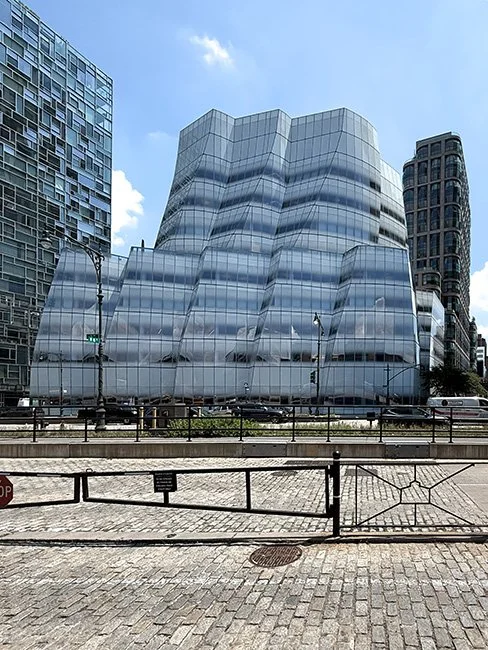
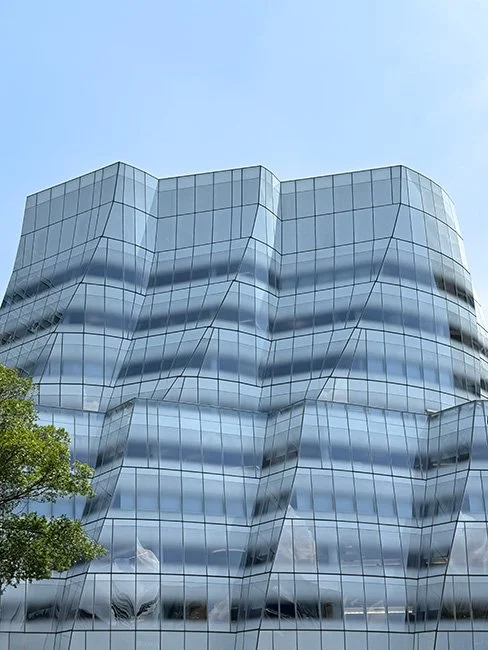
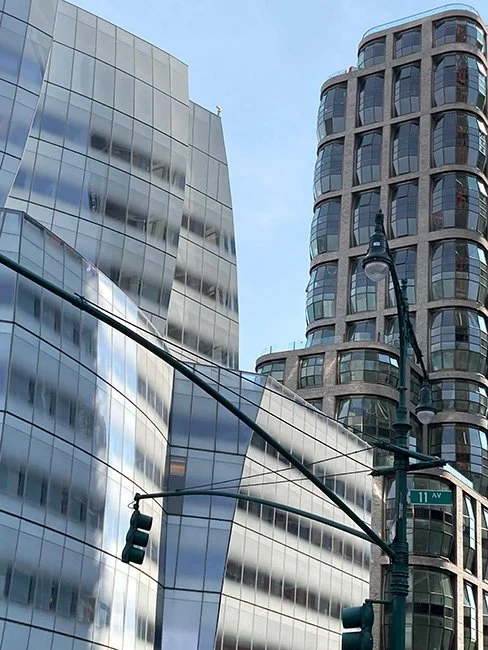
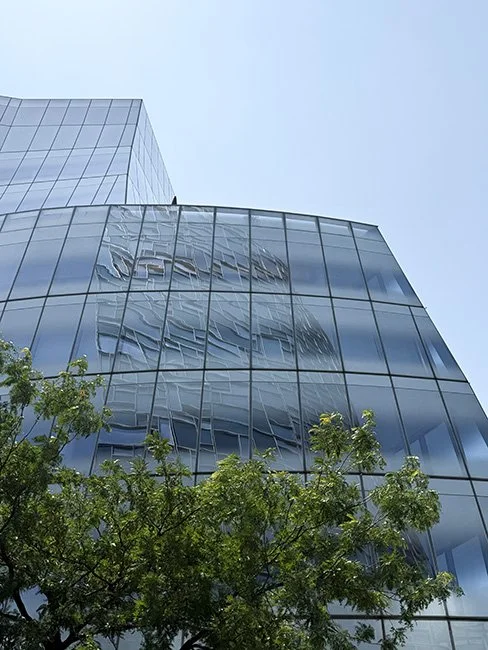
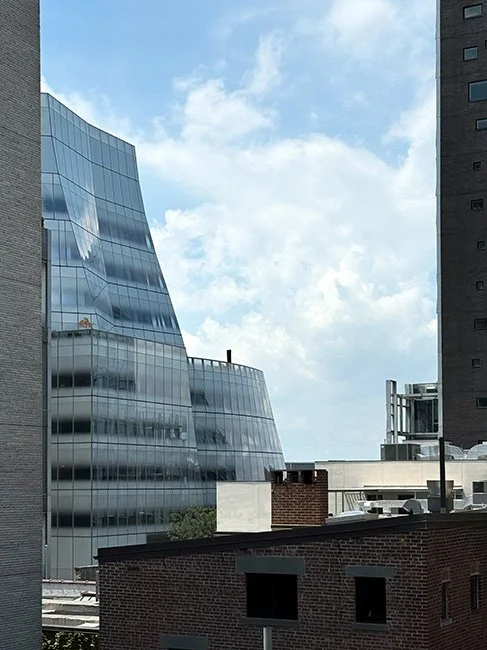
The IAC Building in Manhattan, designed by Frank Gehry, is a standout example of contemporary corporate architecture that defies traditional office design. Located in Chelsea along the Hudson River, the structure is defined by its sculptural form—two glass-clad volumes that seem to twist and billow like sails in the wind. Unlike Gehry’s typical use of metal, the building features a translucent glass façade with a subtle white frit, giving it a luminous, almost ethereal quality that changes with the light throughout the day. The design avoids rigid geometry, instead offering a fluid, layered silhouette that brings motion to the skyline. Inside, open floor plans reflect a modern approach to collaborative workspaces. The IAC Building merges Gehry’s signature expressiveness with a restrained elegance, resulting in a forward-thinking commercial structure that adds a sense of movement and lightness to New York’s architectural landscape.
NOTES:
If you get an early start the building catches the morning sun beautify from the East River or Brooklyn Bridge.
FOUNDATION LOUIS VUITTON
Paris - France
ADDRESS:
8 Av. du Mahatma Gandhi, 75116 Paris, France
ACCESS:
General Admission: €16 | Under 3: FREE
DISCRIPTION:
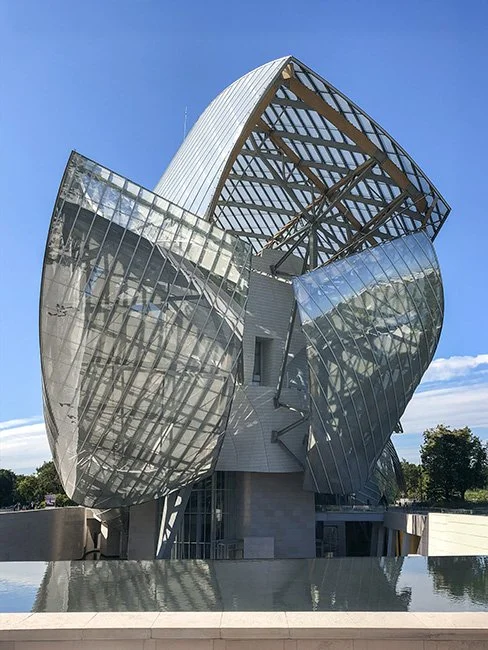
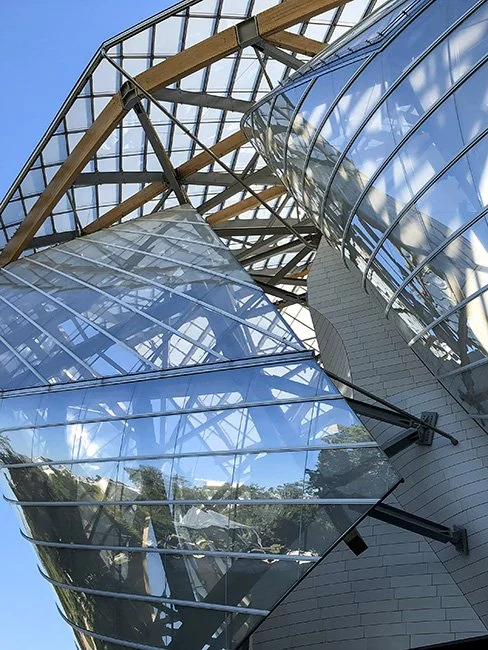
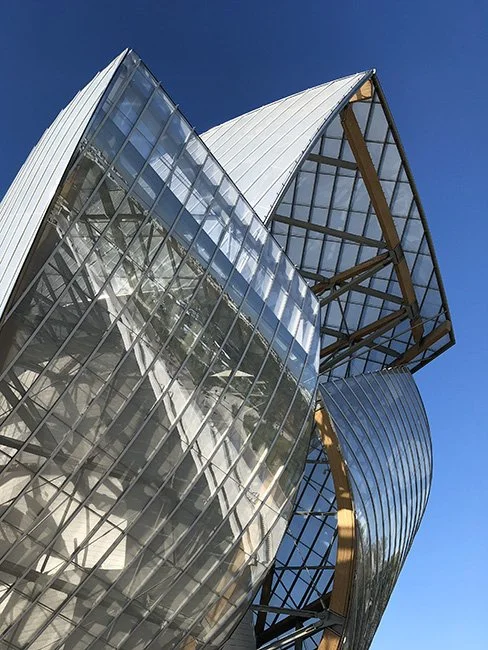
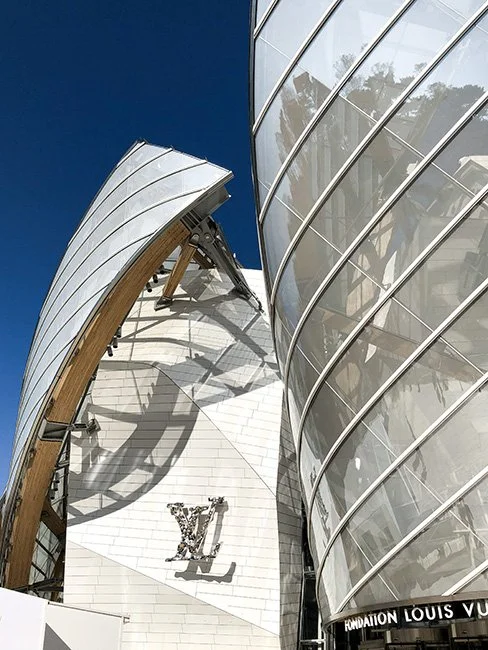
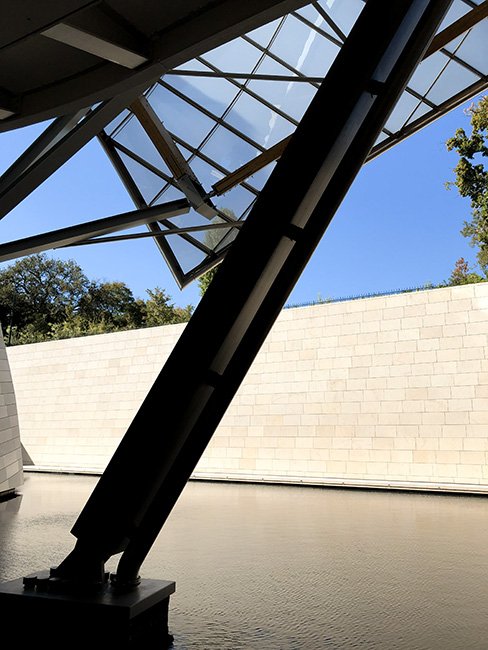
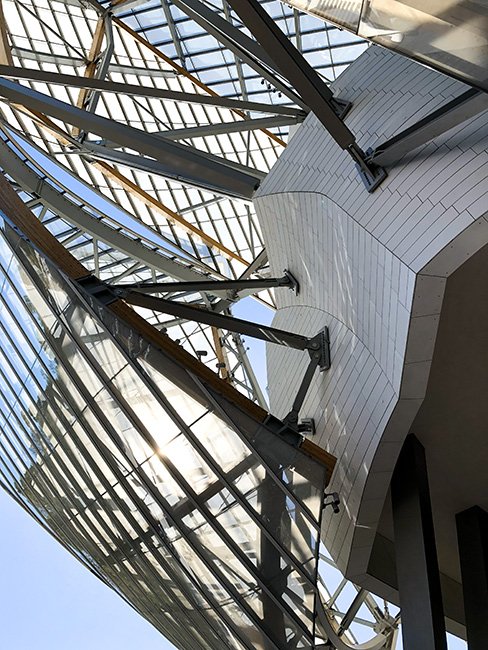
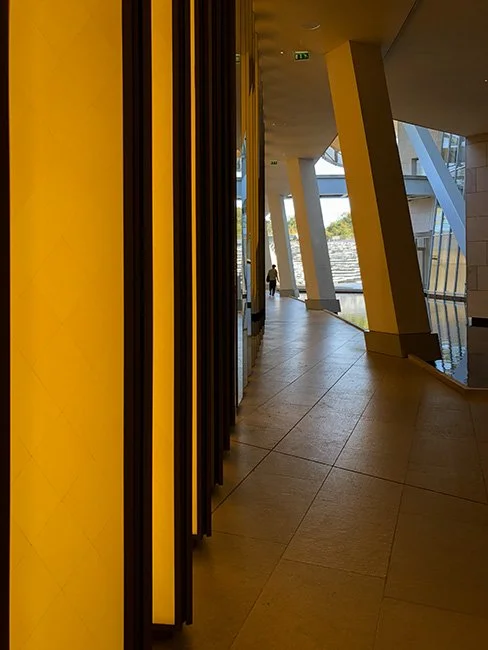
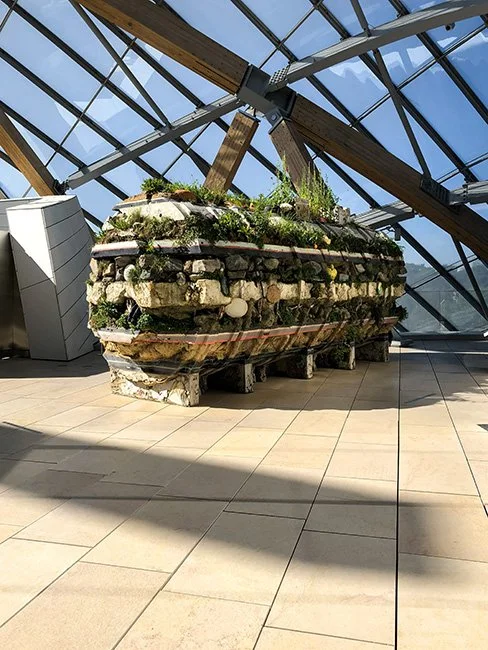
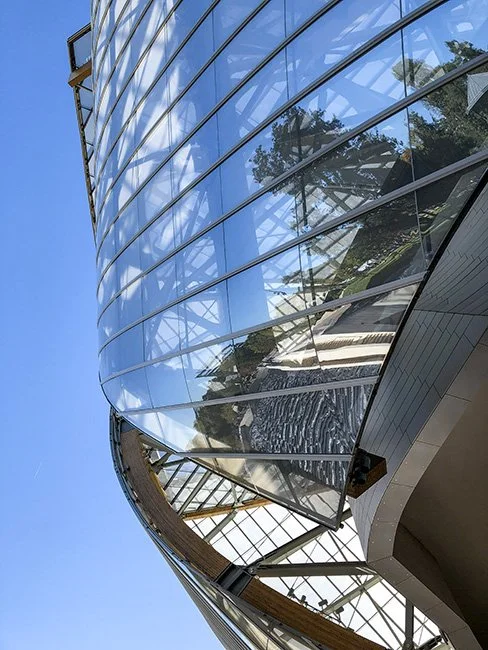
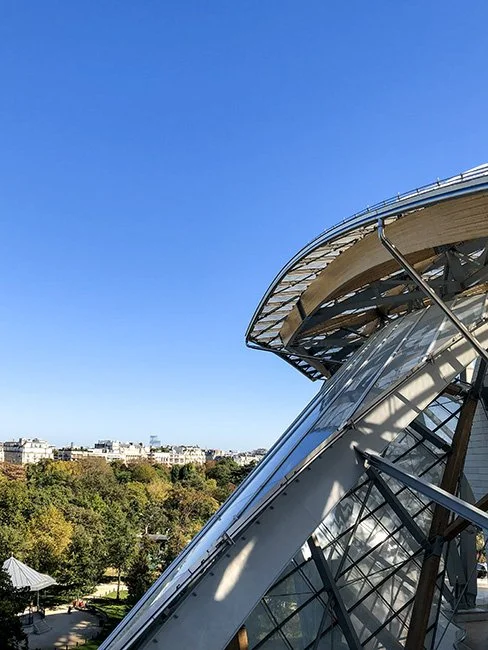
Frank Gehry’s Fondation Louis Vuitton rises from the Bois de Boulogne like what many describe as a “glass ship caught in motion.” Its design is defined by sweeping glass sails that curve around a solid white-block core, creating a dynamic interplay of transparency and mass. Gehry organizes the building as a sequence of drifting volumes, each one shifting subtly so the museum appears to “change shape as you walk around it.” The laminated glass panels filter daylight into the galleries, softening edges and giving the structure a buoyant, almost atmospheric presence. Supported by an intricate steel frame, the architecture merges engineering precision with sculptural fluidity, ultimately presenting a cultural vessel that feels both anchored in nature and ready to glide across it.
HOURS:
Typically open daily from 10am-8pm
NOTES:
The Foundation Louis Vuitton first opened to the public in 2014, but quickly became one of Frank Gehry’s most important projects. There are discounted prices available for students, check the website for details.
IMAGE CREDIT:
(1-11) Joanna Barrios
FEATURED LOCATION: