Ludwig Mies van der Rohe
Ludwig Mies van der Rohe was a German-born architect and a central figure of modern architecture in the twentieth century. Born in 1886, he began his career in Germany and later directed the Bauhaus before relocating to the United States in 1938. His work championed structural clarity and minimal form, expressed through steel frames and expansive glass surfaces. In America, he led the architecture program at the Illinois Institute of Technology and designed its campus, refining his vision of disciplined geometry. Notable projects include the Barcelona Pavilion, the Farnsworth House, and the Seagram Building in New York. Mies pursued an architecture of precision and restraint, seeking universal space defined by proportion and detail. His philosophy of simplicity profoundly shaped international modernism and corporate architecture after World War II.
ABOUT THE ARCHITECT
PROJECTS:
SEAGRAM BUILDING
New York City, NY - United States
ACCESS:
Restricted: Access to the building is not permitted to the public,
ADDRESS:
375 Park Ave, New York, NY 10152
DISCRIPTION:
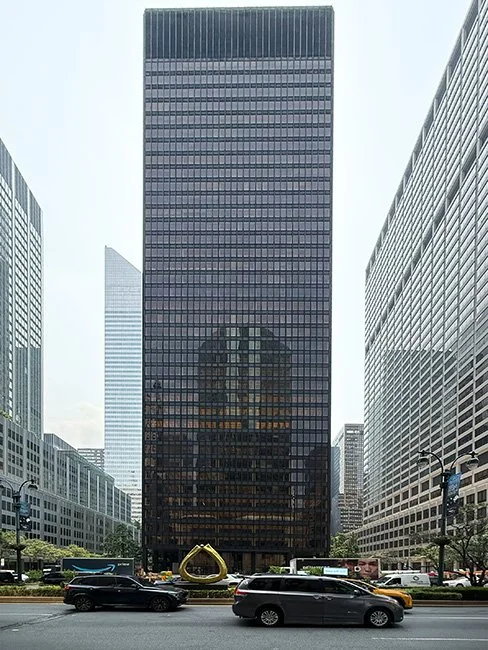
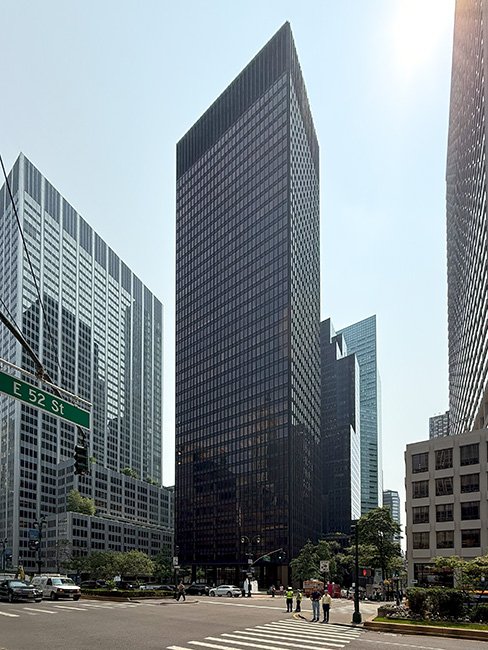
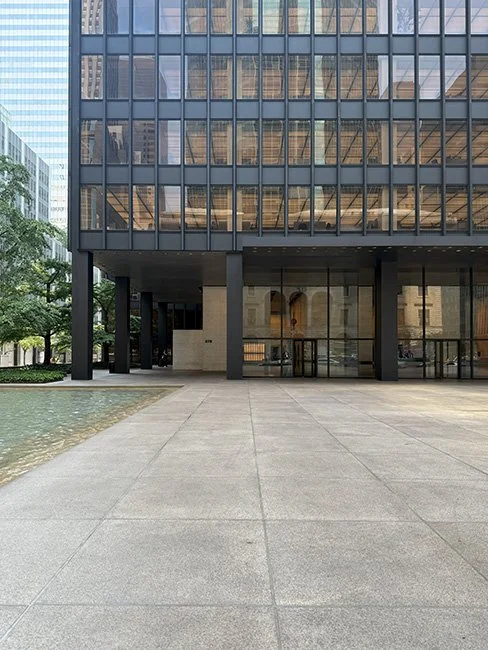
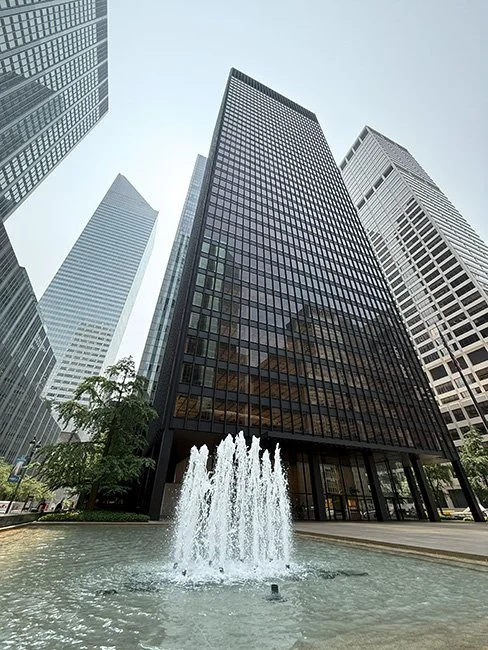
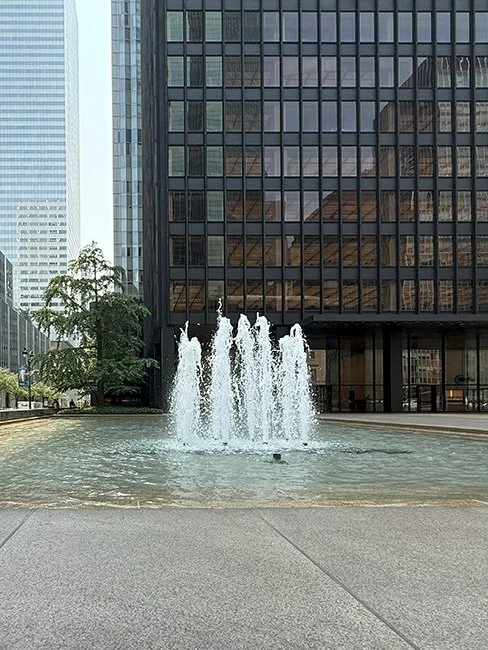
The Seagram Building, completed in 1958, is a landmark of modernist architecture located on Park Avenue in New York City. Designed by Ludwig Mies van der Rohe in collaboration with Philip Johnson, it exemplifies the International Style with its minimalist form, clean lines, and use of modern materials like steel and bronze-tinted glass. The building’s iconic features include its bronze façade, uniform window grid, and set-back plaza that created public space—an innovation at the time. Its structural clarity, elegance, and emphasis on “less is more” made it a model for corporate skyscrapers and a defining symbol of 20th-century architecture.
NOTES:
Kitty-corner is the Lever House by Gordon Bunshaft. These two buildings are the most important international style buildings in New York.